2026-10-01 · Dale Carter
Closed Cell vs Open Cell Spray Foam for Okmulgee Attics, Pole Barns and Shops
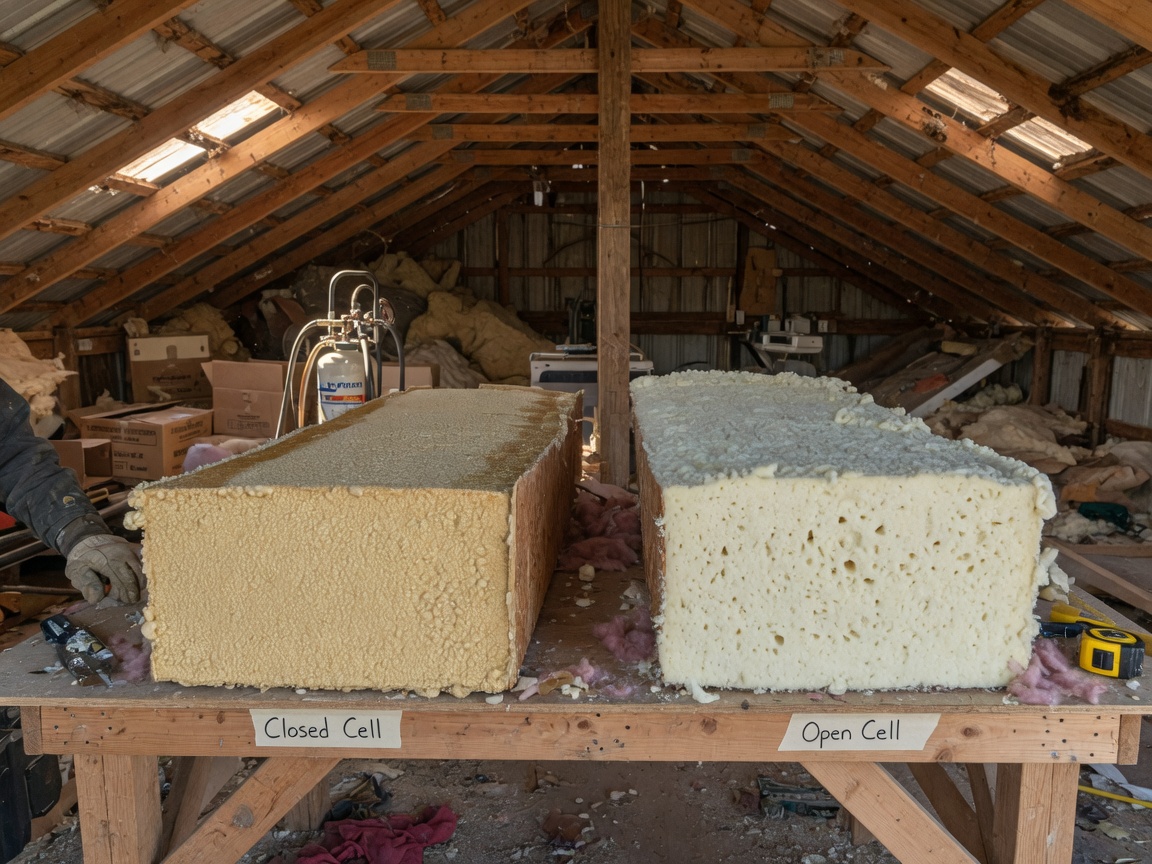
In Okmulgee County, closed cell spray foam provides better long-term performance for attics exposed to humid subtropical summers, while open cell spray foam works well for pole barns and shops where budget and vapor permeability matter more. Homeowners in Downtown Okmulgee and North Okmulgee often choose based on roof deck condition and whether the space stays conditioned year-round.
Closed Cell Spray Foam Performance
Closed cell spray foam creates a rigid, closed structure that adds structural strength and blocks moisture movement. In Okmulgee attics, this matters during hot summers when roof temperatures climb and mild winters allow condensation risks if warm air leaks upward. The material typically installs at 2–3 inches for R-13 to R-19 values in attics and holds up against the occasional heavy rain that soaks into older shingle roofs near the Okmulgee County Courthouse. Crews working from the 1509 S Wood Dr shop note it adheres well to wood and metal decking common in county homes built before 1980.
Open Cell Spray Foam Performance
Open cell spray foam expands to fill cavities with a softer, more flexible matrix that allows some vapor transmission. This suits pole barns and shops around Okmulgee State Park where metal siding expands and contracts with temperature swings. At 3.5–5.5 inches it reaches R-13 to R-20 while costing less per board foot than closed cell. Local operators see it handle the mild winter humidity without trapping moisture against corrugated panels, though it offers no added rigidity during high winds that sweep across open fields near Sapulpa and Henryetta.
Attic Applications in Okmulgee Homes
Attics in Okmulgee County homes often sit above plaster or drywall ceilings with limited access through small hatches. Closed cell spray foam seals rafter bays and prevents humid air from reaching plywood decks during July and August peaks. Open cell works when homeowners want to keep the attic vented and control costs. Either product requires removing old fiberglass first, especially in North Okmulgee properties where previous installations have settled and blocked soffit vents. Attic Spray Foam Insulation crews typically complete a standard 1,200-square-foot attic in two days when access is clear.
Pole Barns and Shops in the County
Pole barns and shops near Muskogee and Henryetta usually feature metal roofs over exposed trusses with dirt or gravel floors. Open cell spray foam applied to the underside of the roof deck reduces summer heat gain without creating a vapor barrier that could trap condensation against the metal. Closed cell becomes the choice when the building stores equipment sensitive to humidity swings or when the owner wants added roof strength. Both products install from the interior, avoiding disruption to exterior siding that faces prevailing winds off the lake at Okmulgee State Park.
Climate and Building Stock Factors
Okulgee’s humid subtropical pattern brings high summer moisture that can drive vapor into uninsulated roof decks, while mild winters reduce the need for extreme R-values. Older homes around the Creek Nation Council House Museum often have single-layer roof decks that benefit from closed cell’s water resistance. Newer metal buildings in rural parts of the county respond better to open cell because it allows the structure to dry if minor leaks occur. Crews adjust pass thickness on site after checking existing insulation depth and roof pitch to avoid over-application that could stress older trusses.